

Lahore: Forced Conversion to Islam for Marriage Is a Serious Human Rights Concern. No religion, tradition, or social practice can justify coercion,
Church Leaders Face Questions After Interfaith Award to Cleric Who Praised Bin Laden Is Withdrawn
London: The withdrawal of a prestigious interfaith award presented by the Archbishop of Canterbury to Pakistani cleric Hafiz Muhammad Tahir Mehmood Ashrafi has raised serious questions about due diligence at both Lambeth Palace and within the Church of Pakistan.
Archbishop Dame Sarah Mullally presented Ashrafi with the Hubert Walter Award for Reconciliation and Interfaith Cooperation at Lambeth Palace on 11 September 2026 — the 25th anniversary of the 9/11 terrorist attacks.
Days later, Lambeth Palace withdrew the honour after previous comments made by Ashrafi came under scrutiny.
Ashrafi, chairman of the Pakistan Ulema Council, had publicly supported giving Osama bin Laden the religious title “Saifullah” — “Sword of God” — in 2007, following Britain’s knighthood of author Salman Rushdie.
Ashrafi reportedly described the designation as the highest title for a Muslim warrior and referred positively to bin Laden’s fighting against Russians, Americans and British forces.
Ashrafi’s representatives have subsequently argued that the remarks have been presented without their proper context. They said he was drawing a comparison intended to demonstrate Muslim anger over Rushdie’s knighthood and that the title was never formally conferred.
Nevertheless, Lambeth Palace concluded that the earlier statements warranted withdrawing the award.
The Archbishop’s office said Ashrafi had originally been honoured because of his longstanding support for religious minorities in Pakistan, particularly Christians, while acknowledging that his previous comments had caused it to reconsider the decision.
Blasphemy laws raise further concerns
The controversy is not confined to remarks made nearly two decades ago.
Ashrafi has been a prominent defender of Pakistan’s blasphemy laws, an issue of profound concern to many Christians and other religious minorities.
In a report published by the Business Recorder in 2023, Ashrafi was reported as saying that Pakistan’s blasphemy law had “never been misused in history” and would continue to be protected.
The same report said he criticised certain dual nationals whom he accused of conspiring against Pakistan and seeking international sanctions over alleged human-rights violations.
There is an apparent tension even within that account: despite the assertion that the law had never been misused, the report subsequently referred to efforts by the Pakistan Ulema Council to develop measures to prevent its misuse.
That deserves clarification.
Ashrafi has, on occasion, intervened in support of Christians facing blasphemy allegations. A notable example was the 2012 case of Rimsha Masih, a young, 14 year old Christian girl accused of desecrating the Qur’an. The case took a dramatic turn when the Muslim cleric who had accused her was himself arrested following allegations that he had planted or tampered with evidence against her. Ashrafi publicly spoke in Rimsha’s defence and condemned attempts to inflame hostility towards Pakistan’s Christian community. His intervention demonstrates that he was certainly aware of the potential for false or manipulated blasphemy accusations. That makes his later reported assertion that Pakistan’s blasphemy law had “never been misused in history” particularly difficult to reconcile with his own previous involvement in such a case. His supporters can legitimately point to occasions when he defended vulnerable Christians, but those interventions also make his subsequent categorical defence of the blasphemy laws all the more deserving of scrutiny and clarification.
But that complexity makes thorough vetting more important, not less.
For an award specifically celebrating reconciliation and interfaith cooperation, a nominee’s positions on blasphemy legislation, religious freedom, minority rights and previous statements concerning terrorism should surely form part of the assessment.
Church of Pakistan also has questions to answer
Responsibility for the controversy cannot rest solely with Lambeth Palace.
Bishop Azad Marshall, Moderator and President Bishop of the Church of Pakistan, reportedly personally recommended Ashrafi for the Lambeth award, praising his contribution to peace, minority rights and interfaith harmony.
Even more remarkably, after controversy engulfed the Lambeth award, Ashrafi’s social-media accounts highlighted a separate Global Peace Award presented to him by the Church of Pakistan.
This creates an uncomfortable situation.
At effectively the same time that Lambeth Palace concluded Ashrafi’s previous statements were sufficiently troubling to withdraw an award for reconciliation, Church of Pakistan leaders continued publicly honouring him for peace and interfaith work.
The Church of Pakistan therefore needs to explain what due diligence it conducted before recommending Ashrafi to Canterbury and before presenting its own award.
Were his statements concerning bin Laden known? Were his views concerning the blasphemy laws considered? Were Christians who campaign on blasphemy-law abuses consulted?
And what exactly are the criteria for deciding that someone merits a Christian “peace” or “interfaith” award?
Interfaith dialogue must not silence persecuted Christians
These questions matter because Pakistani Christians experience religious discrimination and blasphemy accusations not as abstract diplomatic issues but as realities capable of devastating families.
There is an important distinction between engagement and endorsement.
Christian leaders can and should engage Muslim scholars, government representatives and religious leaders, including people with whom they profoundly disagree. In a country such as Pakistan, such relationships can sometimes help defuse communal tensions and protect vulnerable Christians.
But meeting someone is not the same as giving them an award.
A public honour carries institutional endorsement and consequently demands a much higher standard of scrutiny.
There is also a danger that high-level interfaith dialogue can become disconnected from the experiences of Christians at grassroots level.
Its success cannot simply be measured through conferences, photographs and ceremonies involving senior religious leaders. It must also be judged by what happens to vulnerable Christians, converts, impoverished communities and people accused under religious laws.
Nissar Hussain: Church leaders failed converts such as my family
British Christian convert Nissar Hussain believes the controversy reflects a much wider failure by senior Anglican leaders to listen to Christians from Muslim backgrounds.
Hussain and his family suffered years of intimidation and hostility in Bradford after leaving Islam and becoming Christians. BACA subsequently helped the family after their situation deteriorated.
Hussain said his experiences had left him believing that maintaining institutional interfaith relationships had repeatedly been prioritised over listening to converts reporting persecution.
He described the latest controversy as a “betrayal” of Christians and strongly criticised both current and previous Anglican leadership.
While his assessment represents his personal experience and strongly held view, it raises a legitimate question that church authorities should address: are Christians from Muslim backgrounds and others reporting religious persecution adequately represented in institutional interfaith discussions?
BACA calls for a review
Juliet Chowdhry, Trustee of the British Asian Christian Association, believes both Lambeth Palace and the Church of Pakistan should now examine how individuals are selected for interfaith honours.
She said:
“The withdrawal of this award was the correct course once these historic comments came to light, but it is deeply concerning that such information apparently did not prevent the award being presented in the first place.
“An award for reconciliation and interfaith cooperation requires particularly rigorous scrutiny. A nominee’s entire public record should be considered, including their positions on religious freedom, minority rights and blasphemy legislation.
“Mr Ashrafi’s reported assertion that Pakistan’s blasphemy law has ‘never been misused in history’ should itself have prompted questions, particularly given the concerns repeatedly raised by Christians and other minorities about false or malicious accusations.
“We are also concerned that the Church of Pakistan led by Moderator Bishop Azad Marshall, reportedly recommended Mr Ashrafi for the Lambeth award and subsequently presented him with another peace award. Church leaders in Pakistan should explain what checks were undertaken and whether Christians affected by blasphemy accusations were consulted.
“Before making future awards of this significance, Lambeth Palace should seek input from organisations with direct experience of religious persecution, including the British Asian Christian Association and Open Doors. Such consultation could provide perspectives that may not emerge from conversations between senior religious leaders alone.
“This is not an argument against interfaith dialogue. Genuine dialogue requires honesty and accountability. Christians can work constructively with Muslim leaders without overlooking difficult aspects of their public record.
“We therefore call upon Lambeth Palace to publish or clarify the criteria used for these awards, explain what due diligence was undertaken in this case and review the nomination and vetting process. The Church of Pakistan should likewise explain its decision to recommend and honour Mr Ashrafi.
“Having to withdraw an award for reconciliation within days of presenting it is an embarrassment for the Church. The appropriate response now is transparency and reform so that public confidence can be restored.”
Engagement is not endorsement
The lesson from this episode should not be that Christians and Muslims should cease talking to one another. Quite the opposite: meaningful dialogue is often most necessary where disagreements are profound.
But dialogue cannot require Christian institutions to suspend critical judgement.
Lambeth Palace was right to reconsider the award when previously overlooked information came to its attention. The more important question now is why that information was apparently not adequately considered beforehand.
The Church of Pakistan must confront a similar question about its own endorsement of Ashrafi.
Both institutions should review how candidates for peace, reconciliation and interfaith awards are assessed and ensure that organisations working directly with persecuted Christians are given an opportunity to contribute relevant evidence.
Above all, the experiences of vulnerable Christians should carry at least as much weight as relationships between influential religious leaders.
Interfaith cooperation requires dialogue. An award requires something more: rigorous scrutiny, transparency and confidence that the person being honoured genuinely represents the values attached to it.
You May Also Like
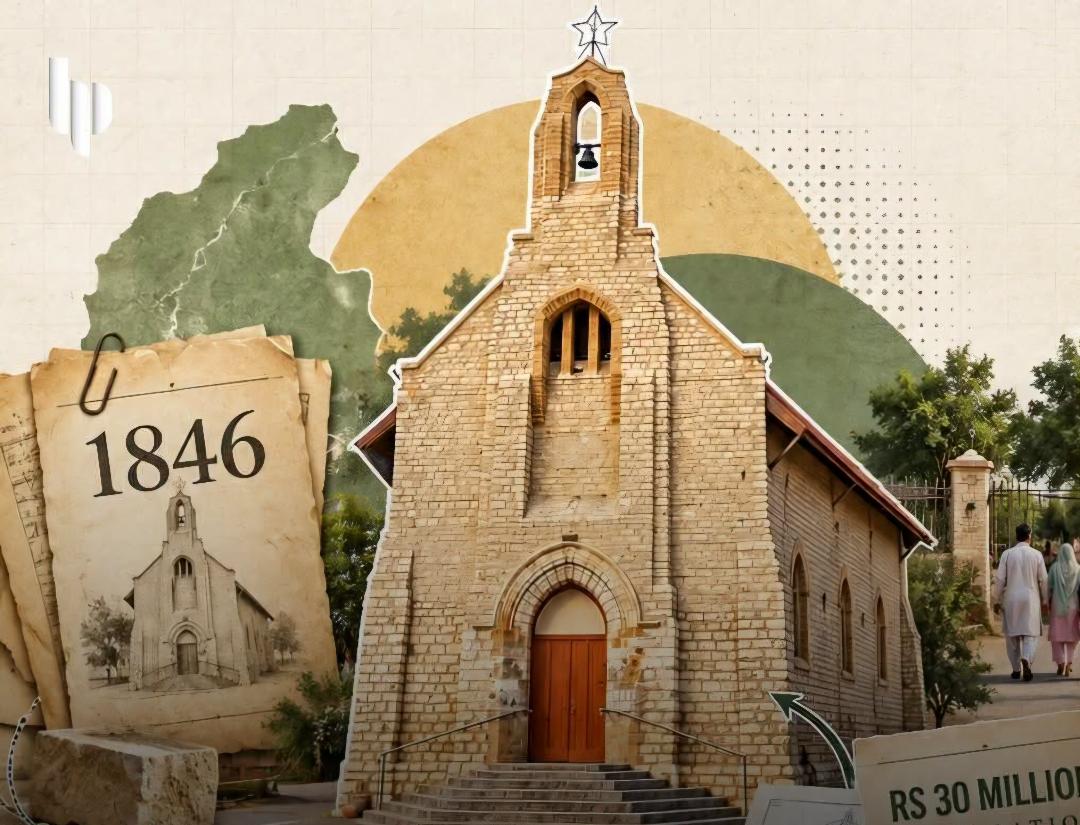
Kotri: The first church in Sindh, the historic Church of Kotri, has been preserved as a historical heritage after 180 years; Deputy Speaker

Pakistan came into being on August 14, 1947 as a result of the division of India which had strong diverse multireligious and multicultural backgrou


PCP need your support that we may provide you better services: click on donate


"Trial of Pakistani Christian Nation" By Nazir S Bhatti
On demand of our readers, I have decided to release E-Book version of "Trial of Pakistani Christian Nation" on website of PCP which can also be viewed on website of Pakistan Christian Congress www.pakistanchristiancongress.org . You can read chapter wise by clicking tab on left handside of PDF format of E-Book.