

Lahore: Forced Conversion to Islam for Marriage Is a Serious Human Rights Concern. No religion, tradition, or social practice can justify coercion,
Pakistan’s Easter Attacks Raise Questions Over Justice and Accountability for Christians By Sardar Mushtaq Gill, Human Rights Defender and Lawyer
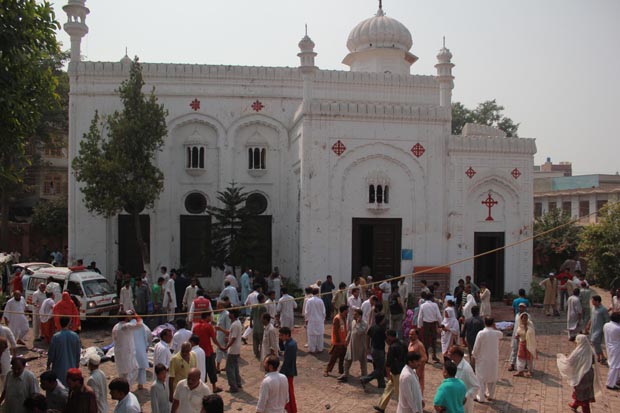
LAHORE, PUNJAB: Pakistan’s history of terrorist attacks against Christians and Christian places of worship has raised continuing concerns about the protection of religious minorities, law enforcement, and justice for victims and their families.
The author argues that accountability for attacks against Christians should extend beyond immediate perpetrators where credible evidence establishes wider responsibility.
The concerns include attacks in Pakistan in which Christians were targeted because of their faith, including the 2013 All Saints Church bombing in Peshawar, the 2015 Youhanabad church attacks in Lahore, and the 2016 Easter Sunday bombing at Gulshan-e-Iqbal Park.
The 2016 attack was particularly significant because the militant group that claimed responsibility reportedly identified Christians celebrating Easter as its intended target, although members of other faith communities were also among those killed and injured.
Easter Attacks and Extremist Targeting
One pattern is difficult to overlook: Islamist extremist terrorist organizations have deliberately targeted Christians and Christian worshippers during Easter and other major Christian observances in several countries.
The 2016 Easter bombing in Lahore, the 2017 Palm Sunday church bombings in Egypt, and the 2019 Easter Sunday attacks in Sri Lanka are among the prominent examples. In such cases, the timing and selection of Christian gatherings raise questions about whether Easter celebrations were deliberately chosen because of their religious significance.
Such attacks may also reflect extremist ideological beliefs that reject or oppose Christianity and other religious communities. This does not establish a single worldwide command or coordinated agenda behind every attack, but the recurring targeting of Christian celebrations warrants serious examination of the ideological motives behind such violence.
The pattern also raises concerns about whether governments are adequately identifying and addressing the specific security threats faced by Christian communities during major religious observances.
Sri Lanka’s Continuing Easter Accountability
Sri Lanka has continued pursuing legal accountability for the 2019 Easter Sunday bombings, which targeted three churches and three hotels and killed more than 260 people, with about 500 others injured.
On September 22, 2026, a Sri Lankan High Court reportedly convicted 15 of 24 defendants in a major case concerning the attacks, while nine were acquitted. Authorities had previously filed 23,270 charges in the case, including offences relating to murder, terrorism, conspiracy, and weapons.
Separate proceedings have also examined alleged failures by senior security officials to act on intelligence warnings before the attacks. Other investigations concerning alleged knowledge or involvement remain subject to legal proceedings.
The Sri Lankan proceedings therefore demonstrate that investigations into a terrorist attack can continue beyond the immediate perpetrators and examine wider questions of responsibility and institutional failure.
The Protection of Christians and the Unanswered Question of Justice
Pakistan has investigated attacks against Christians and arrested suspects. However, questions remain about whether accountability has fully established the wider chain of responsibility where credible evidence exists.
Such accountability may include those who allegedly planned, financed, facilitated, recruited, or otherwise assisted terrorist attacks. Any responsibility must, however, be established through credible evidence and due process.
The protection of Christians therefore extends beyond security arrangements at places of worship. It also requires effective investigations, lawful prosecutions, judicial accountability, and appropriate remedies for victims and their families.
Questions About Pakistan’s Rule of Law
The central concern is whether justice for Christian victims should end with the arrest of an alleged attacker or whether investigations should continue, where evidence permits, to establish wider responsibility.
This issue is particularly important when terrorist organizations publicly claim responsibility for attacks. Such claims may form part of an investigation, but criminal responsibility must ultimately be established through evidence and lawful proceedings.
The record shows that Pakistani authorities have conducted investigations and arrested suspects following attacks. The continuing question is therefore the depth and final outcome of accountability: whether investigations result in transparent prosecutions and convictions where guilt is established.
The International Human Rights Question
The comparison with Sri Lanka also raises a broader question for the international human rights community: Can international human rights institutions more closely examine Pakistan’s record of protecting Christians and ensuring accountability for attacks against religious minorities?
Such scrutiny could examine the effectiveness and independence of investigations, whether credible evidence is followed to establish wider responsibility, and whether victims and their families receive effective remedies through due process.
For Pakistan’s Christian community, protection and justice are closely connected. Security measures may help prevent attacks, but confidence in the rule of law also depends on credible investigations, fair prosecutions, accountability, and meaningful justice.
The history of the Peshawar church bombing, the Youhanabad attacks, and the Lahore Easter bombing therefore continues to raise an important question: Can Pakistan strengthen the protection of Christians by ensuring that attacks against them are fully investigated and that responsibility is established through evidence, law, and due process?
You May Also Like

Kotri: The first church in Sindh, the historic Church of Kotri, has been preserved as a historical heritage after 180 years; Deputy Speaker

Pakistan came into being on August 14, 1947 as a result of the division of India which had strong diverse multireligious and multicultural backgrou


PCP need your support that we may provide you better services: click on donate


"Trial of Pakistani Christian Nation" By Nazir S Bhatti
On demand of our readers, I have decided to release E-Book version of "Trial of Pakistani Christian Nation" on website of PCP which can also be viewed on website of Pakistan Christian Congress www.pakistanchristiancongress.org . You can read chapter wise by clicking tab on left handside of PDF format of E-Book.