
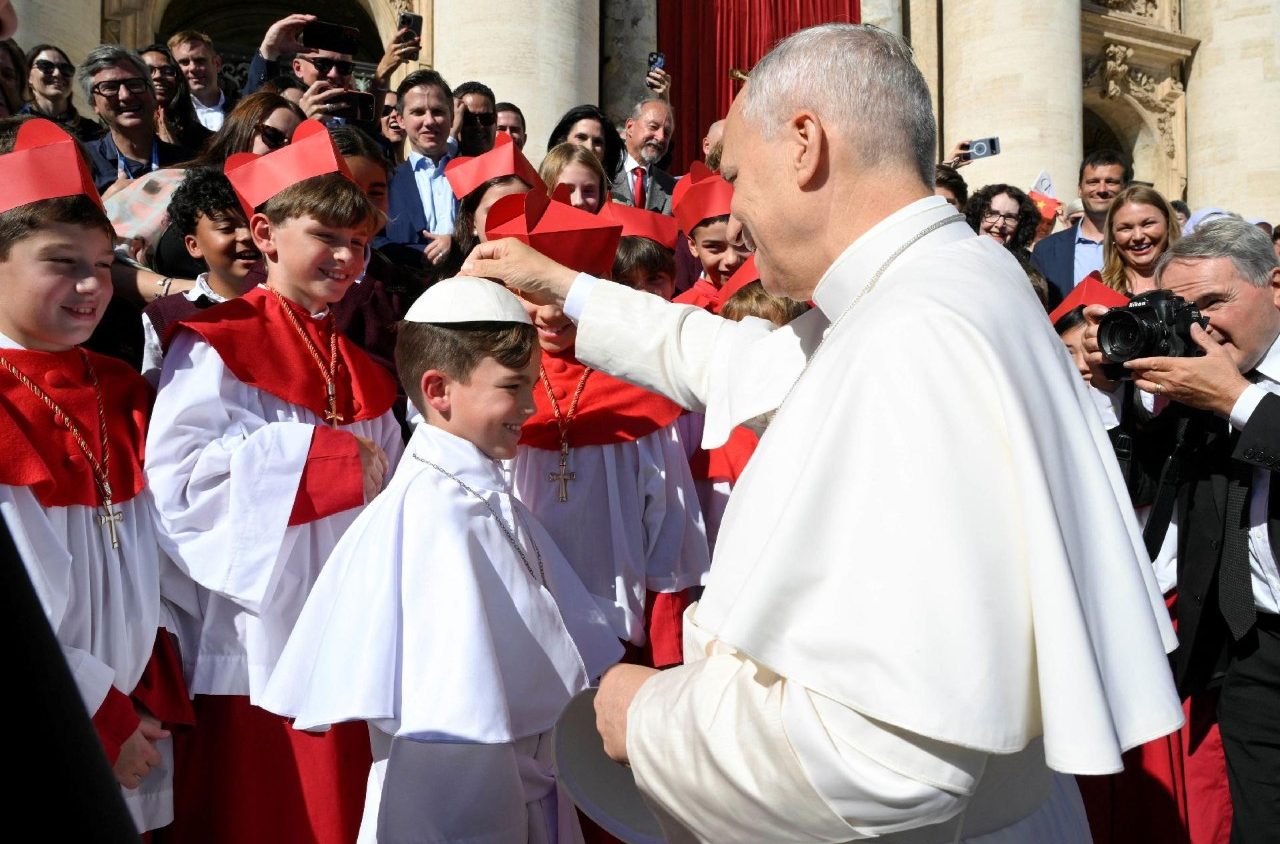
Vatican City: (Vatican News) Students from a Catholic school in Pope Leo XIV’s hometown of Chicago are preparing a "care package" f
The Islamabad Surrender. By Gregg Roman
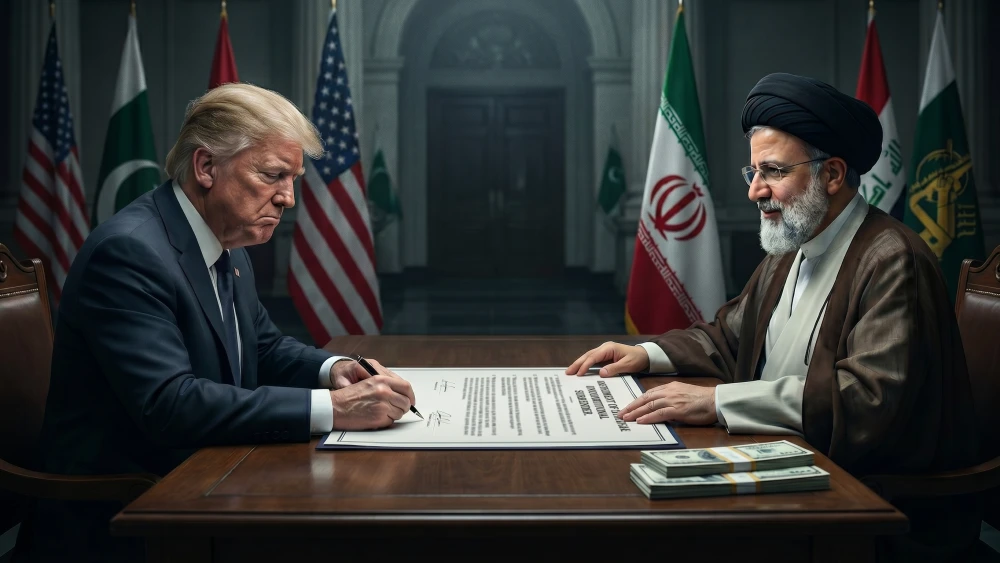
We Fought the Islamic Republic for Thirty-Nine Days and We Were Winning. The Memorandum in Islamabad Hands That Victory Back. And It Sells the Iranian People to Do It.
For thirty years the Middle East Forum has argued one unfashionable proposition: that civilizational threats are not managed, they are ended. We were told this was naïve. Then came the war, thirty-nine days of fire, in which American and Israeli power did to the Iranian war machine what three decades of “engagement” never could. The blockade closed Iran’s economy. The regime that had spent a generation threatening to shut the Strait of Hormuz could not keep its own ports open. For the first time since 1979, the theocracy was not managing us; we were ending it. And at that precise moment, the hour victory required only that we keep our nerve, we are preparing to sign it all away.
The document drafted in Islamabad is being sold as a peace agreement. It is not. It is a surrender, executed by the victor, on the terms of the vanquished. Read it not as a treaty but as a ledger, and the ledger is grotesque. Count what Iran surrenders and you will count to roughly zero. Count what the United States surrenders and you will run out of fingers.
The document drafted in Islamabad is being sold as a peace agreement. It is not.
What does Iran give? It “reaffirms” that it will not build a nuclear weapon: the same reaffirmation it has offered for twenty years while burying centrifuges under mountains. It agrees to “dilute” some of its enriched stockpile on its own soil, under the same inspectors it has expelled, deceived, and locked out before. That is the sum of the Iranian concession: a promise it has already broken, and a chore it will supervise itself.
Now the other column. Within thirty days we lift the naval blockade, the one instrument that actually brought the regime to its knees (Clause 4). We pull our forces back from the region, surrendering the deterrent (Clause 4). We cancel every sanction built over thirty years, including the U.N. Security Council resolutions, primary and secondary, the entire architecture of pressure, handed back at a stroke (Clause 8). We issue Treasury waivers so Iranian oil flows again immediately, hard currency to the regime before a single term is verified (Clause 11). We unfreeze its assets for “any final beneficiary” the Central Bank names, which is to say the Islamic Revolutionary Guard Corps (Clause 12). And then, the masterstroke of self-abasement: we commit to assemble at least three hundred billion dollars to rebuild the very regime we just fought (Clause 7).
Rome fought Carthage three times across a century and concluded, correctly, that a civilizational rival cannot be perpetually managed, only ended. What Rome did not do, in any version of the story worth remembering, was win the war and then tax itself to rebuild Carthage’s walls and rearm its fleet. That is what Clause 7 proposes. We would be the first victor in recorded history to pay reparations to the loser and call it peace. Carthago aedificanda est: Carthage must be rebuilt. We would be financing the next war while pretending we had ended this one.
We would be the first victor in recorded history to pay reparations to the loser and call it peace.
And here is the clause that should end the conversation for anyone with a conscience. Clause 2 commits the United States to “refrain from interfering in [Iran’s] internal affairs.” Strip away the diplomatic varnish and read what it actually says: America promises the ayatollahs that it will stop standing with the Iranian people. No more support for the dissidents in Evin Prison. No more lifelines to the women who burned their headscarves and the workers who shut the bazaars. No more open internet when the regime pulls the plug. We would be signing a contract, with the regime and against the nation, to look away while it does what it does to ninety million people who want nothing more than to be rid of it. We have spent years on the proposition that the Iranian people are not the problem but the solution. Clause 2 trades them for a signature. It is the most cynical line in a cynical document, and it is disqualifying on its own.
Then there is the bomb. We are told this deal stops it. It does the opposite: it blesses it. Clause 9 leaves Iran’s enrichment program standing, commits the parties merely to “discuss” enrichment and Iran’s “nuclear needs,” and sets the floor at on-site dilution: not dismantlement, not removal, not the end of the program. This is weaker than the JCPOA the same regime spent years violating. You do not stop a nuclear program by legitimizing the enrichment that feeds it and trusting the proliferator to police himself. You stop it by ending it. We had the leverage to demand exactly that. We are choosing not to use it.
You do not stop a nuclear program by legitimizing the enrichment that feeds it.
Worst of all, the document is built to be permanent. The final agreement is to be ratified by a binding Security Council resolution (Clause 14), locked behind a Russian and Chinese veto where no future American president can reach it. The standstill clause (Clause 10) ties our hands against any new pressure while Iran reconstitutes. This is not a deal designed to be enforced. It is a deal designed to be irreversible: a cage built for the United States and gilded for the regime.
Its defenders will say it ends a war. It does not end a war; it freezes one we were winning, and guarantees the next one on worse terms. They will say it prevents a bomb; it preserves the program that builds the bomb. They will say it stabilizes the region; three hundred billion dollars in the IRGC’s hands is not stability, it is the financing of every proxy from Beirut to Sana’a. They will say it is peace. It is the peace of the surrendered: the quiet that follows when one side simply stops fighting and pays the other to let it.
There was, and is, another path. Keep the pressure that worked. Hold the blockade and the sanctions until Iran does what nonproliferation actually requires: verifiable dismantlement, not self-supervised dilution. Refuse to fund the regime’s reconstruction; let it answer to its own people for the ruin it brought on them. And above all, stand with those people: loudly, materially, without apology. The durable end of the Iranian threat will not be signed in Islamabad. It will be written in Tehran, by Iranians, when the regime that has menaced the world for half a century finally falls. Our task is to hasten that day, not to insure the regime against it.
We were thirty-nine days into the answer the last thirty years had been waiting for. The choice in front of us is not war or peace. It is victory or its surrender. One requires only that we finish what we started. The other requires that we sign this.
(Gregg Roman is the executive director of the Middle East Forum, previously directing the Community Relations Council of the Jewish Federation of Greater Pittsburgh. In 2014, the Jewish Telegraphic Agency named him one of the “ten most inspiring global Jewish leaders,” and he previously served as the political advisor to the deputy foreign minister of Israel and worked for the Israeli Ministry of Defense. A frequent speaker on Middle East affairs, Mr. Roman appears on international news channels such as Fox News, i24NEWS, Al-Jazeera, BBC World News, and Israel’s Channels 12 and 13. He studied national security and political communications at American University and the Interdisciplinary Center in Herzliya, and has contributed to The Hill, Newsweek, the Los Angeles Times, the Miami Herald, and the Jerusalem Post.)
You May Also Like
Lourdes: (Vatican News by Isabella H. de Carvalho) “Mesdames et messieurs, le Pape est à Lourdes!” (“Ladies and gentlemen,
Vatican City: (By Devin Watkins for Vatican News) Pope Leo XIV boarded the papal plane at Rome’s Fiumicino airport on Friday, accompanied by


PCP need your support that we may provide you better services: click on donate


"Trial of Pakistani Christian Nation" By Nazir S Bhatti
On demand of our readers, I have decided to release E-Book version of "Trial of Pakistani Christian Nation" on website of PCP which can also be viewed on website of Pakistan Christian Congress www.pakistanchristiancongress.org . You can read chapter wise by clicking tab on left handside of PDF format of E-Book.