

There can’t be anything more damaging for a country than its government which thinks that only traditional policies and practices are t
The Professor Who Made Rejection Letters More Humane. By Dr. Ghulam Nabi Fai
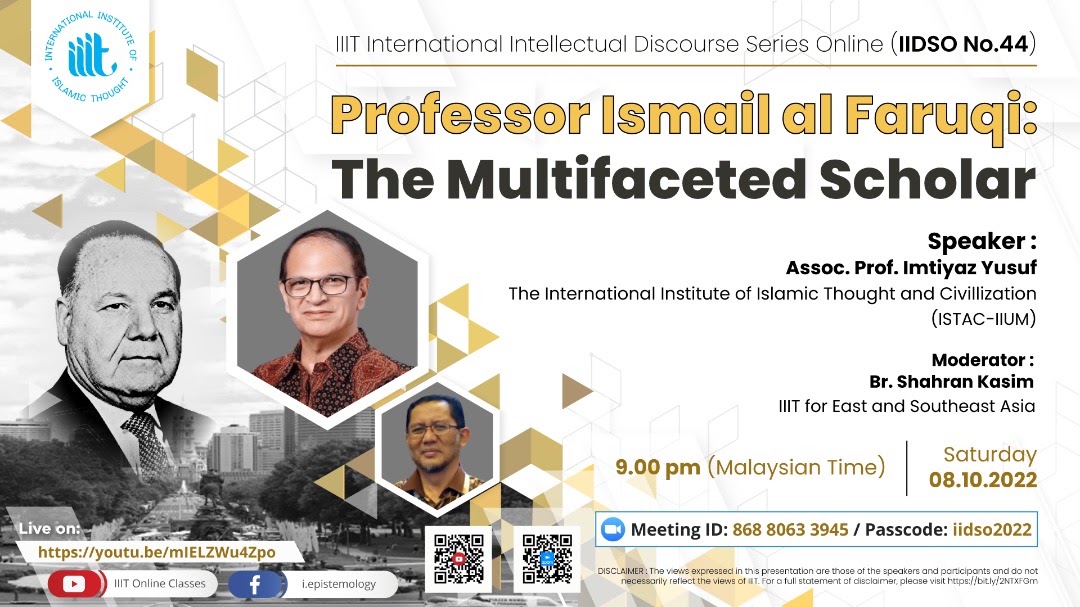
The lesson Professor Ismail Raji Al-Faruqi taught me that I remember most was not delivered in a classroom.
It was during the mid-1980s when he was my teacher and academic adviser at Temple University in Philadelphia. At the same time, he was helping establish the Virginia-based International Institute of Islamic Thought (IIIT), which announced scholarships for graduate studies. Professor Al-Faruqi asked me to place advertisements in Pakistani and Kashmiri newspapers while he advertised the program in Arabic publications.
Hundreds of applications poured in. One day he called me into his office. "Ghulam," he said, "I have received hundreds of applications, including several from Kashmir. Many of them are undergraduate students, but these scholarships are only for graduate programs. We have only fifty scholarships to award."
Then he paused. "I do not want to break the hearts of these young Muslim students." Smiling gently, he added, "When I send them the rejection letters, I will put a ton of sugar into them." That was Al-Faruqi.
This week, that memory returned vividly when a distinguished professor from one of India's leading universities visited me in Washington. Like many younger scholars, he wanted to know not only about Professor Al-Faruqi's intellectual contributions but also about the man behind them. Our conversation reminded me that while many know his books and ideas, fewer know his extraordinary humanity.
Professor Ismail Raji Al-Faruqi is rightly recognized as one of the pioneers of Islamic studies in North America. His scholarship sought to articulate an Islamic worldview capable of engaging modern knowledge while remaining faithful to its religious foundations. He challenged Muslims to think critically about their intellectual heritage and encouraged non-Muslims to appreciate Islam's contributions to world civilization.
Yet his greatest legacy may not be found only in his writings. It lives in the thousands of students whose lives he transformed.
For Al-Faruqi, the Muslim Students Association (MSA) was far more than a campus organization. It represented the possibility of an Ummah that transcended nationality, ethnicity, and race. At Temple University, where more than 350 Muslim students from forty countries studied together, he urged us to reject divisions based on national identity and instead build one community.
Under his guidance, the Temple MSA flourished. He supervised its first elections, where Professor Osman Bakar—today the Rector of the International Islamic University Malaysia—was elected president, and I was elected general secretary. He encouraged us to organize public lectures, engage with the wider university community, and demonstrate that Muslim students could contribute positively to campus life. His vision helped establish the MSA as a respected institution at Temple University.
Years later, when I had the privilege of serving as President of the Muslim Students Association of the United States and Canada, I witnessed how deeply his philosophy had taken root. MSA chapters across North America welcomed newly arrived international students at airports, helped them find housing, and created communities built on service rather than self-interest. Those efforts reflected Al-Faruqi's conviction that scholarship and character must always go together.
His home was an extension of his classroom. Together with his wife, Dr. Lamya Al-Faruqi, he regularly welcomed students into their home. Their dinners and picnics were legendary—not only for the abundance of food but for the warmth they shared with every guest. Hospitality, for them, was not a social courtesy; it was an expression of faith.
Dr. Ahmed Totonji, one of the founders of IIIT, once remarked that Al-Faruqi "would listen to you as if you were his teacher." That humility explains why generations of students admired him as much for his character as for his intellect.
His influence reached far beyond Temple University. Distinguished scholars such as Professor Imtiyaz Yusuf, Professor Osman Bakar, Professor Md, Salleh Yaapar, and Professor John L. Esposito have all acknowledged his profound impact on their intellectual journeys and on the development of Islamic studies around the world.
Professor Esposito who passed away on July 15, 2026, said in one of his lectures that “Professor Al-Faruqi believed deeply in dialogue. He viewed meaningful engagement among Muslims, Christians, and Jews not as a concession but as an intellectual and moral responsibility. At a time when religious polarization continues to dominate public discourse, his commitment to respectful conversation remains remarkably relevant.”
Professor Osman Bakar, Rector of IIUM had high regard for Al-Faruqi's efforts in establishing a dialogue between Islam and other religions. He appreciates his role in promoting the integration of Islamic teachings with modern knowledge. To Osman Bakr, Al-Faruqi was a pivotal figure in the revival of Islamic intellectual tradition.
Professor Dr Imtiyaz Yusuf, one of his students called Prof. al Faruqi, “as an intellectual mujahid, a brilliant man who was a walking encyclopedia of Islam and a trailblazer of academic study of religion.” Speaking passionately, Professor Imtiyaz said that Professor al Faruqi made important contributions in a wide range of fields such as the academic study of Islam, the history and phenomenology of religion and interreligious dialogue.
The tragic murders of Professor Al-Faruqi and Dr. Lamya Al-Faruqi in 1986 cut short two remarkable lives. But their influence did not end that day. It continues in classrooms, universities, research institutes, and, above all, in the lives of those they inspired.
When I think of Professor Al-Faruqi today, I remember neither his many books nor his international reputation. I remember a teacher who worried about the feelings of unsuccessful scholarship applicants and wanted even his rejection letters to carry "a ton of sugar."
In an age that often celebrates brilliance more than kindness, that may be the most enduring lesson he left us.
May Allah the souls of Al-Faruqis in Jannatul Firdous! Ameen.
(Dr. Fai is also Secretary General, World Kashmir Awareness Forum. He can be reached at: WhatsApp: 1-202-607-6435 gnfai2003@yahoo.com www.kashmirawareness.or
It was during the mid-1980s when he was my teacher and academic adviser at Temple University in Philadelphia. At the same time, he was helping establish the Virginia-based International Institute of Islamic Thought (IIIT), which announced scholarships for graduate studies. Professor Al-Faruqi asked me to place advertisements in Pakistani and Kashmiri newspapers while he advertised the program in Arabic publications.
Hundreds of applications poured in. One day he called me into his office. "Ghulam," he said, "I have received hundreds of applications, including several from Kashmir. Many of them are undergraduate students, but these scholarships are only for graduate programs. We have only fifty scholarships to award."
Then he paused. "I do not want to break the hearts of these young Muslim students." Smiling gently, he added, "When I send them the rejection letters, I will put a ton of sugar into them." That was Al-Faruqi.
This week, that memory returned vividly when a distinguished professor from one of India's leading universities visited me in Washington. Like many younger scholars, he wanted to know not only about Professor Al-Faruqi's intellectual contributions but also about the man behind them. Our conversation reminded me that while many know his books and ideas, fewer know his extraordinary humanity.
Professor Ismail Raji Al-Faruqi is rightly recognized as one of the pioneers of Islamic studies in North America. His scholarship sought to articulate an Islamic worldview capable of engaging modern knowledge while remaining faithful to its religious foundations. He challenged Muslims to think critically about their intellectual heritage and encouraged non-Muslims to appreciate Islam's contributions to world civilization.
Yet his greatest legacy may not be found only in his writings. It lives in the thousands of students whose lives he transformed.
For Al-Faruqi, the Muslim Students Association (MSA) was far more than a campus organization. It represented the possibility of an Ummah that transcended nationality, ethnicity, and race. At Temple University, where more than 350 Muslim students from forty countries studied together, he urged us to reject divisions based on national identity and instead build one community.
Under his guidance, the Temple MSA flourished. He supervised its first elections, where Professor Osman Bakar—today the Rector of the International Islamic University Malaysia—was elected president, and I was elected general secretary. He encouraged us to organize public lectures, engage with the wider university community, and demonstrate that Muslim students could contribute positively to campus life. His vision helped establish the MSA as a respected institution at Temple University.
Years later, when I had the privilege of serving as President of the Muslim Students Association of the United States and Canada, I witnessed how deeply his philosophy had taken root. MSA chapters across North America welcomed newly arrived international students at airports, helped them find housing, and created communities built on service rather than self-interest. Those efforts reflected Al-Faruqi's conviction that scholarship and character must always go together.
His home was an extension of his classroom. Together with his wife, Dr. Lamya Al-Faruqi, he regularly welcomed students into their home. Their dinners and picnics were legendary—not only for the abundance of food but for the warmth they shared with every guest. Hospitality, for them, was not a social courtesy; it was an expression of faith.
Dr. Ahmed Totonji, one of the founders of IIIT, once remarked that Al-Faruqi "would listen to you as if you were his teacher." That humility explains why generations of students admired him as much for his character as for his intellect.
His influence reached far beyond Temple University. Distinguished scholars such as Professor Imtiyaz Yusuf, Professor Osman Bakar, Professor Md, Salleh Yaapar, and Professor John L. Esposito have all acknowledged his profound impact on their intellectual journeys and on the development of Islamic studies around the world.
Professor Esposito who passed away on July 15, 2026, said in one of his lectures that “Professor Al-Faruqi believed deeply in dialogue. He viewed meaningful engagement among Muslims, Christians, and Jews not as a concession but as an intellectual and moral responsibility. At a time when religious polarization continues to dominate public discourse, his commitment to respectful conversation remains remarkably relevant.”
Professor Osman Bakar, Rector of IIUM had high regard for Al-Faruqi's efforts in establishing a dialogue between Islam and other religions. He appreciates his role in promoting the integration of Islamic teachings with modern knowledge. To Osman Bakr, Al-Faruqi was a pivotal figure in the revival of Islamic intellectual tradition.
Professor Dr Imtiyaz Yusuf, one of his students called Prof. al Faruqi, “as an intellectual mujahid, a brilliant man who was a walking encyclopedia of Islam and a trailblazer of academic study of religion.” Speaking passionately, Professor Imtiyaz said that Professor al Faruqi made important contributions in a wide range of fields such as the academic study of Islam, the history and phenomenology of religion and interreligious dialogue.
The tragic murders of Professor Al-Faruqi and Dr. Lamya Al-Faruqi in 1986 cut short two remarkable lives. But their influence did not end that day. It continues in classrooms, universities, research institutes, and, above all, in the lives of those they inspired.
When I think of Professor Al-Faruqi today, I remember neither his many books nor his international reputation. I remember a teacher who worried about the feelings of unsuccessful scholarship applicants and wanted even his rejection letters to carry "a ton of sugar."
In an age that often celebrates brilliance more than kindness, that may be the most enduring lesson he left us.
May Allah the souls of Al-Faruqis in Jannatul Firdous! Ameen.
(Dr. Fai is also Secretary General, World Kashmir Awareness Forum. He can be reached at: WhatsApp: 1-202-607-6435 gnfai2003@yahoo.com www.kashmirawareness.or
You May Also Like
In Pakistan’s turbulent political landscape, Parliament remains the one institution where disagreement can be converted into dialogue and con

Some of the people diagnosed with TB in a couple of important community-based screening initiatives in Delhi did not come to the health facility co


PCP need your support that we may provide you better services: click on donate


"Trial of Pakistani Christian Nation" By Nazir S Bhatti
On demand of our readers, I have decided to release E-Book version of "Trial of Pakistani Christian Nation" on website of PCP which can also be viewed on website of Pakistan Christian Congress www.pakistanchristiancongress.org . You can read chapter wise by clicking tab on left handside of PDF format of E-Book.