
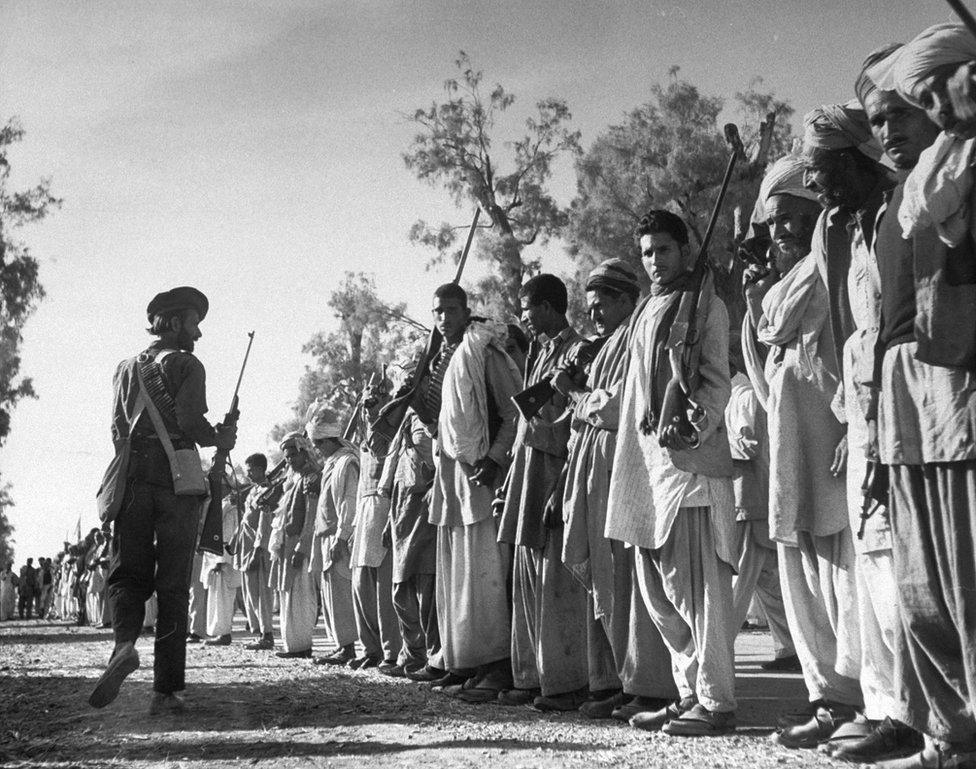
October 22, 1947, remains one of the darkest dates in the history of Jammu and Kashmir. On this day, armed tribal raiders backed by Pakistan launch
How community-led AI-powered X-Rays are helping find TB among those without symptoms. By SHOBHA SHUKLA
Some of the people diagnosed with TB in a couple of important community-based screening initiatives in Delhi did not come to the health facility complaining of a cough, fever or other obvious symptoms. They came for something else - routine follow-up for HIV care, or because a mobile screening camp had reached their neighbourhood.
An Artificial Intelligence (AI)-powered chest X-ray changed what happened next.
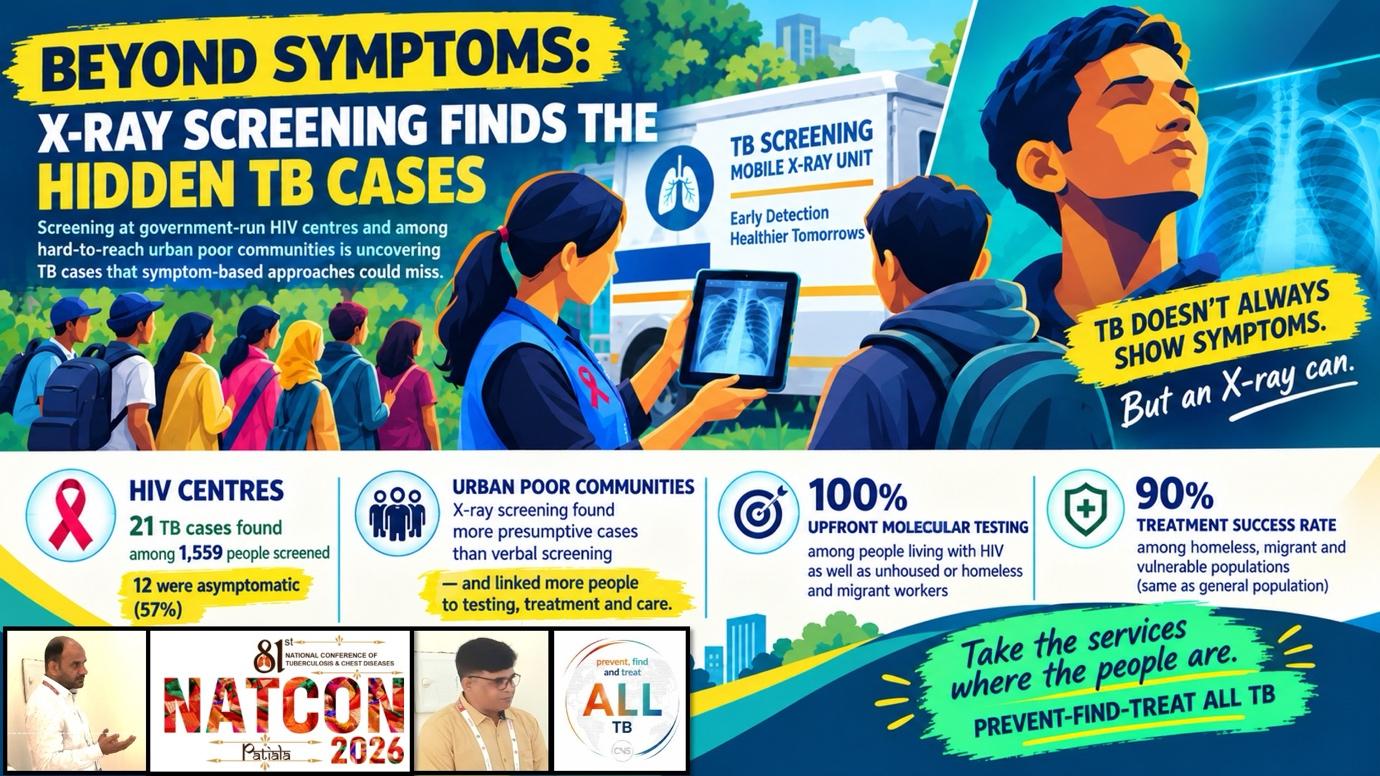
In one initiative involving people living with HIV, 21 people with active TB disease were diagnosed after 1,559 people underwent chest X-ray screening at two government-run antiretroviral therapy (ART) centres in Delhi. Of those 21 patients, 12—more than half—were asymptomatic.
Without the X-ray screening initiative, those 12 people living with HIV would not have been detected for TB disease through verbal screening alone, according to an implementation experience presented by Jahangeer Alam of Humana People to People India (HPPI), at 81st National Conference of Tuberculosis and Chest Diseases (NATCON 2026) in Patiala, India.
Preventing TB along with early and accurate TB diagnosis and linkage to standard treatment, care and support becomes more critical for people with HIV. TB continues to be the most common opportunistic infection among them as well as the leading cause of death.
Jahangeer illustrates a growing challenge for TB programmes: the people who need to be found are not always the people who look sick.
Indian government made a foundational shift in how it finds TB by following latest scientific evidence and WHO guidelines since 2024. India's national and sub-national government-conducted surveys showed that around half of people with active TB disease could only be found when an X-Ray screening was offered (as they were asymptomatic). X-Ray is a screening tool and those with presumptive TB need a confirmatory molecular test. But finding TB early and correctly is a non-negotiable if we want to reduce avoidable human suffering, avert untimely deaths, and also stop the spread of TB infection.
Since 7 December 2024, Indian government-run TB programme runs vans with AI-powered handheld X-Rays to screen people in high-risk populations. In 2025 alone, India found over a million asymptomatic people with active TB disease because of this #FindTB shift.
But government-run ART centres for people with HIV do verbal symptomatic TB screening. Humana People to People India's initiative provides a strong evidence on importance of AI-powered X-Ray screening for TB among people with HIV.
Finding TB during routine HIV care
According to the Sankalak report 2025 of National AIDS Control Programme of the government of India, in Delhi state, 43,035 people living with HIV received lifesaving antiretroviral therapy through 12 ART centres in 2024.
Humana People to People India joined hands with two government-run ART centres to introduce chest X-ray screening camps within the facilities. Rather than requiring people with HIV to make a separate visit for TB screening, people attending the centres for their regular follow-up could undergo an X-ray when they visited it.
The TB screening was supported by real-time, AI-based results suggestive of TB. When a person was identified as presumptive for TB, sputum sample was collected and transported to nearest government-run molecular testing sites on the same day for confirmation.
The numbers were notable.
1,559 people living with HIV underwent X-Ray screening for TB between 1st May and 31st August 2026. The screening identified 273 presumptive TB cases, or 17.51% of those screened.
All 273 presumptive cases - 100% - went through confirmatory molecular testing. As per WHO Global TB Report 2025, only 38% of people with active TB disease were tested on molecular tests in India in 2024. All world leaders committed to completely replace sputum microscopy (which misses detecting over half of TB) with upfront WHO-recommended molecular tests by 2027. So, thanks to Humana People to People India and government-run HIV and TB programmes in Delhi, for achieving 100% upfront molecular testing among people with HIV in this initiative.
Jahangeer Alam further said that 21 confirmed TB cases among people with HIV were identified in this initiative, representing 7.69% of those identified as presumptive.
But the figure that stands out is the number of those who had no symptoms: 12 of the 21 diagnosed patients, or 57.14%, were asymptomatic.
All patients diagnosed with TB were initiated on treatment through the government's National Tuberculosis Elimination Programme.
For the programme, the lesson was straightforward: regular X-Ray screening should be incorporated into government-run ART-centre services and could help detect TB earlier, including asymptomatic or subclinical disease.
Taking screening beyond health facilities
Another important scientific presentation by Ravindra Kumar of Humana People to People India at NATCON 2026 described a different challenge: finding TB among people who may not regularly access formal health services at all - such as homeless or unhoused persons or migrant workers in Delhi. NATCON 2026 was organised weeks ahead of world's largest TB conference, Union World Conference on Lung Health 2026 in Rio de Janeiro, Brazil.
Under Project LEAD-2 (Leveraging, Engaging and Advocating to Disrupt TB transmission), Humana People to People India work with the government's National Tuberculosis Elimination Programme to reach key and other vulnerable populations in urban settings, such as unhoused people, migrants and residents of temporary settlements.
Ravindra and his team worked with nine government-run chest clinics in Delhi state between November 2025 and August 2026. They used hotspot-based screening camps, upfront AI-powered chest X-rays and community-based follow up and support to connect people who screened presumptive for TB with diagnostic, treatment, care and support services - or TB prevention services for those eligible.
Because of community-based regular follow up and support - thanks to well-trained frontline health workers (majority of them are female) of Humana People to People India, TB treatment completion and success rates among homeless or unhoused persons and migrant workers is 90%, same as that of general population.
The experience highlighted a basic but often overlooked reality of urban health programmes: where screening happens, matters.
For dispersed unhoused populations, the project found vehicle-based X-Ray sites more suitable. In densely populated and confined slum environments where vehicles cannot easily enter, ultra-portable and battery-operated X-ray machines provided greater flexibility.
The technology therefore had to adapt to the population, rather than the population having to adapt to the technology, said Ravindra Kumar.
X-ray finds more presumptive cases—but confirmation tells another story
The LEAD-2 data also provide an important comparison between X-Ray screening and stand-alone verbal screening.
Among 30,025 people screened by X-Ray, 4,082 or 13.5% were identified as presumptive TB cases.
By comparison, stand-alone verbal screening identified 759 presumptive TB cases among 13,912 people, or 5.4%.
On the surface, the difference suggests that X-Ray identified a substantially larger proportion of people who required further investigation.
But the picture changed when the programme looked at how many presumptive cases were eventually confirmed as TB on an upfront molecular test.
Among those identified through verbal screening, 354 of 759 presumptive cases were diagnosed with TB—a yield of 46.6%.
Among those identified as presumptive through X-Ray, 234 of 4,082 were diagnosed with TB—a yield of 5.7%.
The figures are not simply a contest between two screening methods. Instead, they show that the methods identify different groups of people and serve different functions.
Verbal screening may concentrate on people who already have TB symptoms or other indications of the disease. X-Ray can cast a wider net, identifying radiological abnormalities among people who may not report symptoms yet. Early diagnosis of TB is critical if we are to break the chain of infection transmission as well as provide lifesaving TB treatment to the person.
That wider net can mean that more people need confirmatory testing even though the proportion ultimately confirmed with TB is lower. For programmes trying to find the “missing” TB cases, that distinction matters.
The hidden cases
The ability of X-Ray screening to identify TB among people without symptoms was another important finding from LEAD-2.
Ravindra Kumar said that 26,639 asymptomatic people were screened. Of these, 1,533 were identified as presumptive cases and 52 were confirmed to have TB disease.
The LEAD-2 model linked screening with government-run upfront molecular testing and treatment services, creating a pathway from identifying a presumptive case to confirming disease and starting treatment - and ensuring regular community-based follow up and support to ensure daily treatment adherence, and eventually treatment completion.
Humana People to People India again reported 100% upfront molecular testing among presumptive cases and 99% treatment initiation among people diagnosed with TB at government-run chest clinics.
Linkage between screening, diagnosis, treatment, care and support is critical, thanks to Humana People to People India champions on the ground. A screening programme can identify people who need further investigation, but its public-health value ultimately depends on whether those people complete testing and, when TB is confirmed, begin treatment, adhere to the treatment, complete treatment and get cured.
Prevention alongside detection
The Delhi experience also went beyond finding active TB.
The LEAD-2 teams incorporated TB preventive treatment into the screening-camp model. This allowed the programme to address prevention alongside active case finding. The presentation reports providing TB preventive treatment to 232 close contacts of those with active TB disease, and 1,222 key and other vulnerable population members.
This creates a broader continuum: identifying people with possible active disease, confirming or ruling out TB, initiating treatment where necessary, and providing preventive interventions to eligible people at risk.
Take the services where the people are
Taken together, the two HPPI presentations tell a story that goes beyond the performance of an individual machine or artificial-intelligence system. They show what happens when screening is brought closer to the people most likely to be missed.
The most striking lesson from the two Delhi experiences reiterate the finding that if we do verbal TB screening, we would be missing around half of those with TB disease - who could be found so early only with an X-Ray screening. Disease that is invisible to the patient can remain invisible to the health system unless screening methods are designed to look for it.
As India intensifies its effort to find people with TB earlier, the question is no longer only who walks into a clinic with symptoms. It is also who never walks in at all—and who has TB without knowing it. Like Jahangeer, Ravindra and their team, are we truly ready to reach and serve the unreached?
(Shobha Shukla is a feminist, health and development justice advocate, and an award-winning founding Managing Editor and Executive Director of CNS (Citizen News Service). She serves as Chairperson of Global AMR Media Alliance (GAMA), Host and Coordinator of SHE & Rights (Sexual Health with Equity & Rights), President of Asia Pacific Media Alliance for Health, Gender and Development Justice (APCAT Media), and founder leader of DJOP (Development Justice for Older Persons) initiative. She is the author of 2026 book "Justice Unbound: Feminist Voices on Gender Equality, Health Rights, and Inclusive Futures" and was also the Lead Discussant for SDG-3 at United Nations inter-governmental High Level Political Forum 2025. GAMA , led by her, received the AMR One Health Emerging Leaders and Outstanding Talents Award at UN High Level Ministerial Conference on AMR 2024. Follow her on X @shobha1shukla or read her writings here www.bit.ly/ShobhaShukla)
An Artificial Intelligence (AI)-powered chest X-ray changed what happened next.
In one initiative involving people living with HIV, 21 people with active TB disease were diagnosed after 1,559 people underwent chest X-ray screening at two government-run antiretroviral therapy (ART) centres in Delhi. Of those 21 patients, 12—more than half—were asymptomatic.
Without the X-ray screening initiative, those 12 people living with HIV would not have been detected for TB disease through verbal screening alone, according to an implementation experience presented by Jahangeer Alam of Humana People to People India (HPPI), at 81st National Conference of Tuberculosis and Chest Diseases (NATCON 2026) in Patiala, India.
Preventing TB along with early and accurate TB diagnosis and linkage to standard treatment, care and support becomes more critical for people with HIV. TB continues to be the most common opportunistic infection among them as well as the leading cause of death.
Jahangeer illustrates a growing challenge for TB programmes: the people who need to be found are not always the people who look sick.
Indian government made a foundational shift in how it finds TB by following latest scientific evidence and WHO guidelines since 2024. India's national and sub-national government-conducted surveys showed that around half of people with active TB disease could only be found when an X-Ray screening was offered (as they were asymptomatic). X-Ray is a screening tool and those with presumptive TB need a confirmatory molecular test. But finding TB early and correctly is a non-negotiable if we want to reduce avoidable human suffering, avert untimely deaths, and also stop the spread of TB infection.
Since 7 December 2024, Indian government-run TB programme runs vans with AI-powered handheld X-Rays to screen people in high-risk populations. In 2025 alone, India found over a million asymptomatic people with active TB disease because of this #FindTB shift.
But government-run ART centres for people with HIV do verbal symptomatic TB screening. Humana People to People India's initiative provides a strong evidence on importance of AI-powered X-Ray screening for TB among people with HIV.
Finding TB during routine HIV care
According to the Sankalak report 2025 of National AIDS Control Programme of the government of India, in Delhi state, 43,035 people living with HIV received lifesaving antiretroviral therapy through 12 ART centres in 2024.
Humana People to People India joined hands with two government-run ART centres to introduce chest X-ray screening camps within the facilities. Rather than requiring people with HIV to make a separate visit for TB screening, people attending the centres for their regular follow-up could undergo an X-ray when they visited it.
The TB screening was supported by real-time, AI-based results suggestive of TB. When a person was identified as presumptive for TB, sputum sample was collected and transported to nearest government-run molecular testing sites on the same day for confirmation.
The numbers were notable.
1,559 people living with HIV underwent X-Ray screening for TB between 1st May and 31st August 2026. The screening identified 273 presumptive TB cases, or 17.51% of those screened.
All 273 presumptive cases - 100% - went through confirmatory molecular testing. As per WHO Global TB Report 2025, only 38% of people with active TB disease were tested on molecular tests in India in 2024. All world leaders committed to completely replace sputum microscopy (which misses detecting over half of TB) with upfront WHO-recommended molecular tests by 2027. So, thanks to Humana People to People India and government-run HIV and TB programmes in Delhi, for achieving 100% upfront molecular testing among people with HIV in this initiative.
Jahangeer Alam further said that 21 confirmed TB cases among people with HIV were identified in this initiative, representing 7.69% of those identified as presumptive.
But the figure that stands out is the number of those who had no symptoms: 12 of the 21 diagnosed patients, or 57.14%, were asymptomatic.
All patients diagnosed with TB were initiated on treatment through the government's National Tuberculosis Elimination Programme.
For the programme, the lesson was straightforward: regular X-Ray screening should be incorporated into government-run ART-centre services and could help detect TB earlier, including asymptomatic or subclinical disease.
Taking screening beyond health facilities
Another important scientific presentation by Ravindra Kumar of Humana People to People India at NATCON 2026 described a different challenge: finding TB among people who may not regularly access formal health services at all - such as homeless or unhoused persons or migrant workers in Delhi. NATCON 2026 was organised weeks ahead of world's largest TB conference, Union World Conference on Lung Health 2026 in Rio de Janeiro, Brazil.
Under Project LEAD-2 (Leveraging, Engaging and Advocating to Disrupt TB transmission), Humana People to People India work with the government's National Tuberculosis Elimination Programme to reach key and other vulnerable populations in urban settings, such as unhoused people, migrants and residents of temporary settlements.
Ravindra and his team worked with nine government-run chest clinics in Delhi state between November 2025 and August 2026. They used hotspot-based screening camps, upfront AI-powered chest X-rays and community-based follow up and support to connect people who screened presumptive for TB with diagnostic, treatment, care and support services - or TB prevention services for those eligible.
Because of community-based regular follow up and support - thanks to well-trained frontline health workers (majority of them are female) of Humana People to People India, TB treatment completion and success rates among homeless or unhoused persons and migrant workers is 90%, same as that of general population.
The experience highlighted a basic but often overlooked reality of urban health programmes: where screening happens, matters.
For dispersed unhoused populations, the project found vehicle-based X-Ray sites more suitable. In densely populated and confined slum environments where vehicles cannot easily enter, ultra-portable and battery-operated X-ray machines provided greater flexibility.
The technology therefore had to adapt to the population, rather than the population having to adapt to the technology, said Ravindra Kumar.
X-ray finds more presumptive cases—but confirmation tells another story
The LEAD-2 data also provide an important comparison between X-Ray screening and stand-alone verbal screening.
Among 30,025 people screened by X-Ray, 4,082 or 13.5% were identified as presumptive TB cases.
By comparison, stand-alone verbal screening identified 759 presumptive TB cases among 13,912 people, or 5.4%.
On the surface, the difference suggests that X-Ray identified a substantially larger proportion of people who required further investigation.
But the picture changed when the programme looked at how many presumptive cases were eventually confirmed as TB on an upfront molecular test.
Among those identified through verbal screening, 354 of 759 presumptive cases were diagnosed with TB—a yield of 46.6%.
Among those identified as presumptive through X-Ray, 234 of 4,082 were diagnosed with TB—a yield of 5.7%.
The figures are not simply a contest between two screening methods. Instead, they show that the methods identify different groups of people and serve different functions.
Verbal screening may concentrate on people who already have TB symptoms or other indications of the disease. X-Ray can cast a wider net, identifying radiological abnormalities among people who may not report symptoms yet. Early diagnosis of TB is critical if we are to break the chain of infection transmission as well as provide lifesaving TB treatment to the person.
That wider net can mean that more people need confirmatory testing even though the proportion ultimately confirmed with TB is lower. For programmes trying to find the “missing” TB cases, that distinction matters.
The hidden cases
The ability of X-Ray screening to identify TB among people without symptoms was another important finding from LEAD-2.
Ravindra Kumar said that 26,639 asymptomatic people were screened. Of these, 1,533 were identified as presumptive cases and 52 were confirmed to have TB disease.
The LEAD-2 model linked screening with government-run upfront molecular testing and treatment services, creating a pathway from identifying a presumptive case to confirming disease and starting treatment - and ensuring regular community-based follow up and support to ensure daily treatment adherence, and eventually treatment completion.
Humana People to People India again reported 100% upfront molecular testing among presumptive cases and 99% treatment initiation among people diagnosed with TB at government-run chest clinics.
Linkage between screening, diagnosis, treatment, care and support is critical, thanks to Humana People to People India champions on the ground. A screening programme can identify people who need further investigation, but its public-health value ultimately depends on whether those people complete testing and, when TB is confirmed, begin treatment, adhere to the treatment, complete treatment and get cured.
Prevention alongside detection
The Delhi experience also went beyond finding active TB.
The LEAD-2 teams incorporated TB preventive treatment into the screening-camp model. This allowed the programme to address prevention alongside active case finding. The presentation reports providing TB preventive treatment to 232 close contacts of those with active TB disease, and 1,222 key and other vulnerable population members.
This creates a broader continuum: identifying people with possible active disease, confirming or ruling out TB, initiating treatment where necessary, and providing preventive interventions to eligible people at risk.
Take the services where the people are
Taken together, the two HPPI presentations tell a story that goes beyond the performance of an individual machine or artificial-intelligence system. They show what happens when screening is brought closer to the people most likely to be missed.
The most striking lesson from the two Delhi experiences reiterate the finding that if we do verbal TB screening, we would be missing around half of those with TB disease - who could be found so early only with an X-Ray screening. Disease that is invisible to the patient can remain invisible to the health system unless screening methods are designed to look for it.
As India intensifies its effort to find people with TB earlier, the question is no longer only who walks into a clinic with symptoms. It is also who never walks in at all—and who has TB without knowing it. Like Jahangeer, Ravindra and their team, are we truly ready to reach and serve the unreached?
(Shobha Shukla is a feminist, health and development justice advocate, and an award-winning founding Managing Editor and Executive Director of CNS (Citizen News Service). She serves as Chairperson of Global AMR Media Alliance (GAMA), Host and Coordinator of SHE & Rights (Sexual Health with Equity & Rights), President of Asia Pacific Media Alliance for Health, Gender and Development Justice (APCAT Media), and founder leader of DJOP (Development Justice for Older Persons) initiative. She is the author of 2026 book "Justice Unbound: Feminist Voices on Gender Equality, Health Rights, and Inclusive Futures" and was also the Lead Discussant for SDG-3 at United Nations inter-governmental High Level Political Forum 2025. GAMA , led by her, received the AMR One Health Emerging Leaders and Outstanding Talents Award at UN High Level Ministerial Conference on AMR 2024. Follow her on X @shobha1shukla or read her writings here www.bit.ly/ShobhaShukla)
You May Also Like
In the developed nations of the world—such as those in Europe, the United States, and the United Kingdom—a democratic form of governmen

Evidence is “the raw data, material, testimony, or information presented to support or disprove a claim.” Proof is “the final con


PCP need your support that we may provide you better services: click on donate


"Trial of Pakistani Christian Nation" By Nazir S Bhatti
On demand of our readers, I have decided to release E-Book version of "Trial of Pakistani Christian Nation" on website of PCP which can also be viewed on website of Pakistan Christian Congress www.pakistanchristiancongress.org . You can read chapter wise by clicking tab on left handside of PDF format of E-Book.