
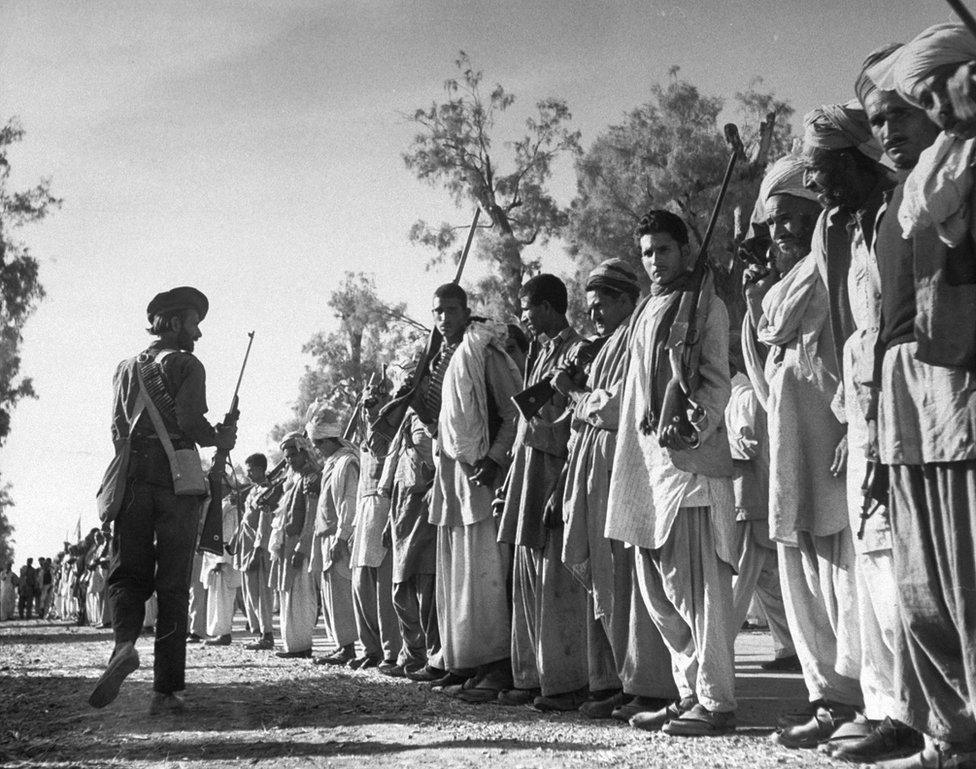
October 22, 1947, remains one of the darkest dates in the history of Jammu and Kashmir. On this day, armed tribal raiders backed by Pakistan launch
Kashmir: Seventy-Nine Years of a Promise Unfulfilled. By Dr. Ghulam Nabi Fai, Charman World Form for Peace & Justice
The dispute over Jammu and Kashmir remains unresolved nearly eight decades after the events of October 1947. Although the Government of India maintains that the Instrument of Accession settled the question of sovereignty, that position does not resolve the deeper question of whether the people of Jammu and Kashmir were ever given the opportunity to determine their own political future.
The historical record, including India's own statements before the international community, makes clear that the issue cannot be addressed solely through competing political narratives. The continuing dispute calls for the United Nations to reaffirm its credibility by addressing the unfulfilled promise concerning the political future of Jammu and Kashmir.
The time has come for the United Nations to help settle the Kashmir dispute and ensure that the question left unresolved since October 1947 is finally addressed.
October 27 marks one of the most consequential dates in the modern history of Jammu and Kashmir. It was on that day in 1947 that the first Indian troops arrived in Srinagar. For the people of Kashmir, that moment marked the beginning of a political and military dispute that, nearly eight decades later, remains unresolved.
The Government of India maintains that the accession of Jammu and Kashmir to India was legally completed when Maharaja Hari Singh signed the Instrument of Accession (IOA) on October 26, 1947. New Delhi argues that the document settled the question of sovereignty once and for all.
But that claim deserves examination—not merely through competing political narratives, but through the historical record and India's own statements before the international community.
The question is not simply what happened in October 1947. The deeper question is whether the people of Jammu and Kashmir were ever given the opportunity to determine their own political future, as India itself repeatedly promised.
What Happened in October 1947?
The chronology surrounding the alleged signing of the Instrument of Accession has long been contested.
Thousands of Kashmiris from the Poonch region, many of whom had served in the Maharaja's forces, had revolted against his rule by October 1947. Fighting subsequently spread toward Srinagar. On October 25, forces led by Major Khurshid Anwar crossed the Kohala area after overcoming resistance from forces loyal to the Maharaja. Brigadier Rajendra Singh, who had been tasked with blocking the advance, was killed during the fighting.
The rapidly deteriorating military situation reportedly caused Maharaja Hari Singh to leave Srinagar for Jammu. Accounts of his journey describe difficult road conditions and an overnight halt at Patnitop before his arrival in Jammu.
This chronology raises an important question: if the Maharaja did not reach Jammu until October 27, how could he have signed the Instrument of Accession there on October 26, as the official Indian account maintains?
The question becomes even more complicated when different contemporary accounts are examined.
V. P. Menon, a senior Indian official who played a central role in the integration of princely states, later wrote in The Story of the Integration of the Indian States that he traveled to Jammu with Mehr Chand Mahajan, Deputy Prime Minister of the State on October 26, 1947 and obtained the Maharaja's signature on the Instrument of Accession before returning to New Delhi.
Yet Mahajan's own account, published in Looking Back, is cited as contradicting the claim that he traveled to Jammu on October 26.
There are also accounts concerning the British High Commission's records that have been cited by critics of the official chronology. According to these accounts, Menon attended a Defence Committee meeting in New Delhi on the morning of October 26 and was scheduled to travel to Jammu by air later that afternoon. The flight allegedly did not depart because of the absence of night-landing facilities, after which Menon met British High Commissioner Alexander Symon in New Delhi that evening.
If these records are accurately represented, they raise legitimate historical questions about the precise circumstances and timing of the alleged signing.
Where Is the Original Instrument?
The controversy does not end with the chronology. British journalist and historian Andrew Whitehead has written about attempts to examine the original Instrument of Accession and the difficulties encountered in gaining access to it. British historian Alastair Lamb also questioned the provenance and authenticity of the document and wrote that attempts to examine the original encountered claims that it was unavailable.
Whether one accepts Lamb's conclusions or not, the controversy illustrates a broader problem: the documentary history of Kashmir's accession has never acquired the transparency that a matter of such enormous historical and geopolitical consequence deserves.
If the document is the definitive legal foundation for the territorial status of Kashmir, why should its provenance, custody and contents remain the subject of such persistent controversy?
The Principle of the People's Will
There is another, perhaps even more important, contradiction in India's historical position.
The subcontinent contained more than 500 princely states at the time of Partition. The question of accession was not always treated simply as a matter of a ruler's personal decision.
The cases of Hyderabad and Junagadh are particularly relevant to this debate. India argued in those cases that the wishes of the population mattered and that the ruler could not necessarily determine the political future of millions of people by himself. Kashmir therefore cannot be examined in isolation from the principles India itself invoked elsewhere.
More importantly, India repeatedly told the international community that the people of Kashmir would ultimately have a say in determining their future.
On November 2, 1947, Prime Minister Jawaharlal Nehru declared that the fate of Kashmir would ultimately be decided by its people and that India would not retreat from that pledge.
India's representatives made similar statements before the United Nations. Indian delegate Sir Benegal N. Rau told the Security Council in 1951: “The people of Kashmir are not mere chattels to be disposed of according to a rigid formula; their future must be decided on their own interest and in accordance with their own desires.”
During the Security Council's deliberations in 1952, Indian representative M. C. Setalvad likewise emphasized the principle that the people of Jammu and Kashmir should freely determine their future. These statements matter.
If accession had already been regarded as completely and irrevocably settled, why did India repeatedly speak of the wishes of the Kashmiri people before the United Nations? And if the matter was purely an internal issue, why was it brought before the Security Council in the first place?
A Conflict That Never Went Away
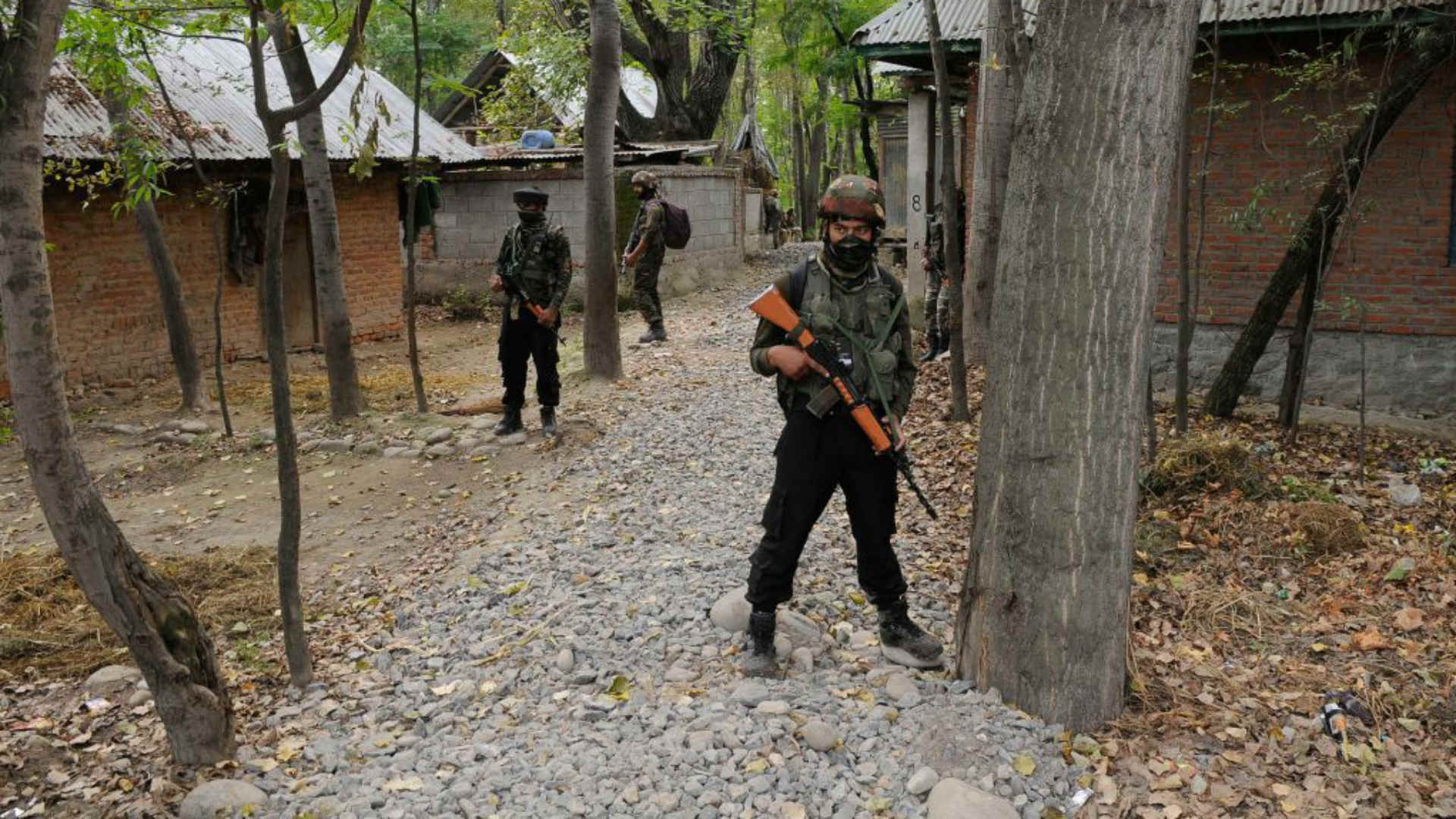
Nearly eight decades later, Kashmir remains divided, militarized and politically unresolved.
The people of Jammu and Kashmir have endured decades of violence, displacement, political repression and human-rights allegations. International and Indian human-rights organizations have documented serious allegations concerning excessive use of force, arbitrary detention, disappearances, sexual violence and other abuses. These allegations deserve independent investigation, accountability and due process regardless of political affiliation.
The scale of the military presence in the region has also profoundly affected everyday life.
India argues that its security measures are necessary to combat terrorism and protect its territorial integrity. Kashmiris who oppose Indian rule, however, see the extensive military and security apparatus as a system of occupation and political coercion. A durable settlement cannot emerge simply by imposing one side's narrative on the other.
August 5, 2019: A New Chapter
On August 5, 2019, the Indian government fundamentally altered the constitutional and political arrangements governing Jammu and Kashmir. Article 370 was effectively rendered inoperative, the state was reorganized into two Union Territories, and a sweeping security and political crackdown followed.
Thousands were detained, including political leaders and activists. Communications were restricted, and journalists, civil-society organizations and human-rights defenders faced an increasingly difficult environment.
New Delhi presented these measures as necessary for development, integration and security. Critics saw them as another unilateral step taken without the consent of the Kashmiri people.
The dispute over Kashmir therefore remains not merely territorial but fundamentally political: who has the right to determine the future of the people who live there?
The Illusion of Normalcy
New Delhi has increasingly emphasized a return to normalcy in Kashmir. But political normalcy cannot be measured simply by the number of tourists visiting the region, government buildings functioning or large crowds attending official events.
The circumstances surrounding Prime Minister Narendra Modi's March 7, 2024, rally in Srinagar illustrate why claims of normalcy should be examined critically.
Senior officials described attendance as voluntary and enthusiastic. Former Chief Ministers Mehbooba Mufti and Omar Abdullah, however, alleged that government employees and schoolchildren had been pressured into attending. Abdullah publicly alleged that employees were ordered to assemble in the early morning and threatened with disciplinary consequences if they failed to appear.
These competing accounts demonstrate precisely why independent journalism and credible monitoring remain essential. A government may produce images of large crowds, but those images alone cannot establish political consent.
Normalcy is not merely the absence of open violence. Normalcy means freedom of expression, political participation, accountability, dignity and the ability of people to determine their political future without coercion.
The Danger Beyond Kashmir
The international community should not regard Kashmir as an endlessly frozen dispute.
The Pahalgam attack of April 2025 and the subsequent escalation between India and Pakistan demonstrated once again how quickly violence surrounding Kashmir can push two nuclear-armed states toward confrontation.
That is what makes Kashmir different from an ordinary territorial dispute. India and Pakistan are nuclear powers. China, another nuclear power, is also directly involved in territorial disputes in the wider Himalayan region. More than a billion people live in South Asia.
The consequences of a major military confrontation would therefore extend far beyond Kashmir.
The international community cannot afford to wait for another crisis before recognizing the danger.
The United Nations Must Recover Its Voice
The United Nations has been involved in the Kashmir dispute since its earliest years. Security Council resolutions, international diplomacy and repeated commitments to the principle of self-determination form an important part of the dispute's historical record. Yet decades have passed without a political settlement.
The credibility of international institutions suffers when commitments remain indefinitely on paper while realities on the ground move in the opposite direction. The answer is not another round of empty statements.
The United Nations should appoint a credible Special Envoy, strengthen independent human-rights monitoring, encourage meaningful confidence-building measures and facilitate sustained negotiations among the three essential stakeholders: India, Pakistan and the genuine leadership of the people of Jammu and Kashmir.
Any lasting settlement must ultimately address the aspirations and political rights of the Kashmiri people.
History provides examples of conflicts once considered impossible to resolve. East Timor's long struggle ultimately resulted in an internationally supervised process of self-determination. South Africa demonstrated that systems of entrenched political domination can eventually give way to democratic transformation. The Palestinian question, despite its continuing tragedy, remains a powerful reminder that the world's conscience cannot indefinitely ignore the rights of a people. So why should Kashmir remain the exception?
The Valley Cannot Remain a Valley of Silence
The people of Kashmir have waited for generations. They have lived through wars, ceasefires, insurgency, repression, displacement and political upheaval. They have seen promises made and promises deferred. Their suffering has too often been reduced to statistics or treated as an inconvenient footnote in the rivalry between India and Pakistan. That must change.
Kashmir should not be viewed merely as territory to be possessed by one state or another. It is also a question of human beings, political rights and the principle of self-determination.
The international community should insist that all parties respect human rights and return to meaningful negotiations. India, Pakistan and Kashmiri representatives must come to the table.
The objective should not be to reward one side or punish another. It should be to create a political process capable of producing a settlement that is peaceful, credible and acceptable to the people most directly affected. The world has waited long enough.
If the United Nations is serious about the principles it has proclaimed for generations, Kashmir is an opportunity to demonstrate that those principles still mean something.
The time for empty declarations has passed. What is required now is sustained diplomacy, independent monitoring and a genuine political process. Kashmir cannot remain the valley of silence. It is time for the United Nations to redeem its credibility—and for the world to listen.
(Dr. Ghulam Nabi Fai can be reached at: WhatsApp: 1-202-607-6435 gnfai2003@yahoo.com)
You May Also Like
In the developed nations of the world—such as those in Europe, the United States, and the United Kingdom—a democratic form of governmen
Evidence is “the raw data, material, testimony, or information presented to support or disprove a claim.” Proof is “the final con


PCP need your support that we may provide you better services: click on donate


"Trial of Pakistani Christian Nation" By Nazir S Bhatti
On demand of our readers, I have decided to release E-Book version of "Trial of Pakistani Christian Nation" on website of PCP which can also be viewed on website of Pakistan Christian Congress www.pakistanchristiancongress.org . You can read chapter wise by clicking tab on left handside of PDF format of E-Book.