
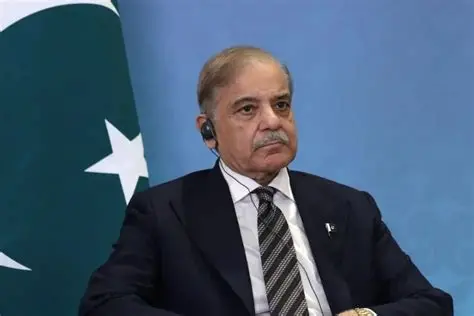
Islamabad: (PPF) Nine press freedom and human rights organisations wrote to Prime Minister Shehbaz Sharif, urging immediate action to address the r
Muslim divorce law unconstitutional rules Supreme Court of India

NEW DELHI: August 22, 2017. (Reuters) - India's Supreme Court on Tuesday ruled a Muslim instant divorce law unconstitutional, a landmark victory for Muslim women who have spent decades arguing that it violated their right to equality.
The law allows Muslim men to divorce their wives simply by uttering the word "talaq" three times. Muslim women say they have been left destitute by husbands divorcing them through "triple talaq", including by Skype and WhatsApp.
Under the ruling, the court said the government should frame new divorce legislation to replace the abolished practice of triple talaq.
"Finally, I feel free today," Shayara Bano, who was divorced through triple talaq and was one of five women who brought the case, told Reuters after the ruling.
"I have the order that will liberate many Muslim women."
The ruling was delivered by a panel of five male judges from different faiths - Hinduism, Christianity, Islam, Sikhism and Zoroastrianism.
Three of the five ruled that the practice was unconstitutional, overruling the senior-most judge in India, the chief justice.
He told the government to come up with a new law within six months.
Many Muslim countries have banned triple talaq, including neighboring Pakistan and conservative Saudi Arabia. It survived in India because the officially secular country allows religious communities to apply their own laws in personal matters such as marriage, divorce and property inheritance.
Leading Islamic scholars say Muslim divorce law as set out in the Koran does not justify the use of triple talaq.
Opposition to the law helped forge an unlikely coalition of Muslim women and Prime Minister Narendra Modi and his ruling Hindu nationalist party, which wanted the law quashed, and pitted it against Muslim groups that say the state has no right to interfere in religious matters.
Some fear that the Hindu majority is trying to limit Islamic influence in society. Muslims make up about 14 percent of India's 1.3 billion people.
Two of the judges said triple talaq was "arbitrary" and violated fundamental rights. Justice Kurian Joseph said the practice went against the basic tenets of Islam.
'POWERFUL MEASURE'
Opponents of the law have toiled to abolish it for decades and were given a boost last year when Modi threw his support behind Bano, calling the law derogatory and discriminatory against women.
Modi hailed the judgment as "historic."
"It grants equality to Muslim women and is a powerful measure for women empowerment," he said in a tweet.
Tuesday's ruling could spur Modi's party to push again for its long-held desire for a uniform civil code, which would end the application of religious laws to civil issues.
"The Supreme Court has a right to interfere in the personal space and they have done so," said Maneka Gandhi, minister for women and child development.
Some Muslim institutions have said that while triple talaq is wrong, the law should be reviewed by the community itself.
The All India Muslim Personal Law Board said it would contest the court's decision.
"The fact that only three of the five judges have deemed the practice illegal shows that there was no clear decision," member Maqsood Hasani Nadvi said.
Rights groups Amnesty, while welcoming the judgment, called for the repeal of all religious family laws that violate women's rights.
India's civil codes are designed to protect the independence of religious communities.
Unlike most Hindu civil laws, which have been codified and reformed, Muslim personal laws have largely been left untouched.
You May Also Like

Islamabad: (PPF) A judicial magistrate in Islamabad granted the National Cyber Crime Investigation Agency (NCCIA) three-day physical remand of jour

There are victories that end when the guns fall silent, and others that continue to shape a nation’s conscience long after the battlefield ha


PCP need your support that we may provide you better services: click on donate


"Trial of Pakistani Christian Nation" By Nazir S Bhatti
On demand of our readers, I have decided to release E-Book version of "Trial of Pakistani Christian Nation" on website of PCP which can also be viewed on website of Pakistan Christian Congress www.pakistanchristiancongress.org . You can read chapter wise by clicking tab on left handside of PDF format of E-Book.