

There can’t be anything more damaging for a country than its government which thinks that only traditional policies and practices are t
Ganga Jamuni Tehzeeb: India’s Living Tradition of Shared Culture. By Farooq Ganderbali
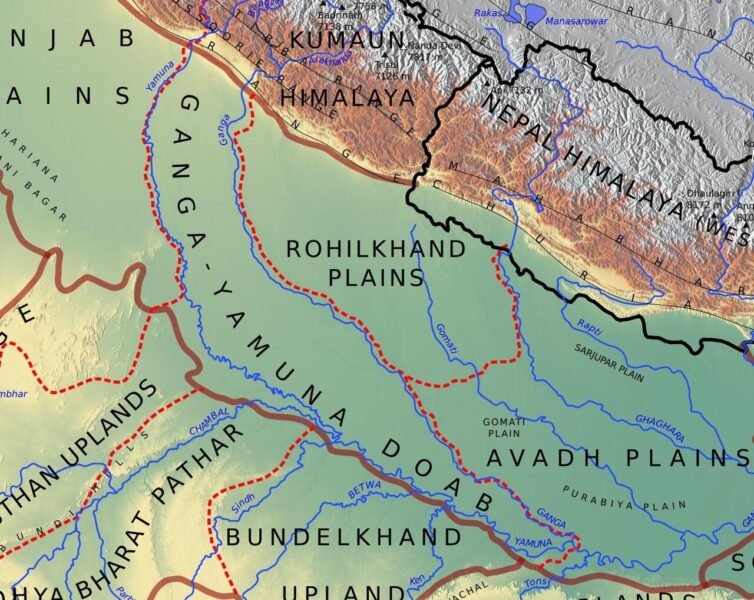
Ganga Jamuni Tehzeeb is synonymous with the evolution of India’s composite culture, shaped by continuous and organic interaction between Hindus and Muslims over nearly a millennium. Its roots can be traced to the advent of Islam in the 7th century, when cultural contact began and later flourished during the medieval period of Indian history.
Contrary to the belief that medieval rulers sought cultural annihilation, the primary objectives of the Sultanate and Mughal rulers were political authority and economic control. They governed vast territories without attempting to erase local traditions. Instead, sustained interaction between communities gave rise to rich syncretic traditions—many of which continue to thrive across India even today, despite contemporary pressures from divisive and exclusionary politics.
One of the most significant legacies of this interaction was the birth of the Urdu language. The fusion of Persian dialects with the Western Hindi spoken in and around Delhi produced a new linguistic form that later evolved into Urdu. Importantly, many Hindu scholars embraced Urdu not only as an administrative language but also as a powerful medium of literary expression, contributing immensely to its growth and refinement.
This cultural synthesis was equally evident in architecture. Hindu architecture absorbed Islamic elements such as arches, domes, and intricate geometric designs, while Islamic architecture incorporated local motifs and craftsmanship. This fusion is clearly visible in Jodhabai’s Palace within Agra Fort, the architectural grandeur of Fatehpur Sikri, and the arches of the Quwwat-ul-Islam Mosque. Similar influences are found in the havelis of Rajasthan and Madhya Pradesh, as well as in the Indo-Saracenic architectural styles of Jodhpur, Bikaner, and Jaisalmer. In art, the blending of Persian techniques with vibrant Hindu colour palettes produced exquisite miniature paintings celebrated for their beauty and lyricism.
Festivals further reflected this shared cultural space. Hindu festivals such as Diwali were celebrated as Jashn-e-Charagan, while Holi became Jashn-e-Gulabi. During the reign of Tipu Sultan, Dussehra celebrations in Mysore were held for ten days under royal patronage. Similarly, Tazia processions became part of the broader social fabric, involving participation across communities.
These traditions remain alive even today. When the wari passes through Muslim localities during Eid or other festivals, Muslim residents either defer their own celebrations or actively include the warkaris by sharing food and hospitality. Many Muslims also participate in the wari, reflecting a living example of India’s composite culture.
Beyond festivals and language, the spirit of Sufism and shared sacred spaces has played a decisive role in strengthening Hindu–Muslim unity in India. Even today, millions of Hindus visit the dargah of Khwaja Moinuddin Chishti Dargah and Nizamuddin Auliya Dargah, seeking peace, blessings, and spiritual solace. These shrines of love and humanity stand as living symbols of India’s syncretic ethos, where faith transcends religious boundaries.
This culture of mutual reverence extends across religions. People from all communities bow their heads at the Golden Temple, visit Tirumala Tirupati Devasthanams, and participate in each other’s spiritual traditions with devotion and respect. Such practices reflect the deeply rooted Indian belief that spirituality is inclusive, not exclusive.
A shining example of this shared heritage is witnessed every year during the Shri Amarnath Ji Yatra. Kashmiri Muslims extend wholehearted support to Hindu pilgrims by providing food, shelter, medical assistance, and protection—often risking their own lives. This extraordinary display of brotherhood stands as a powerful message to the world that Kashmiriyat and Ganga Jamuni Tehzeeb are alive, resilient, and stronger than hatred. Such solidarity is rarely seen anywhere else in the world.
History provides abundant evidence of inter-religious cooperation in governance and administration. Emperor Akbar’s court included the famous Hindu Navratnas such as Birbal and Todarmal. Nearly 33 percent of officials in Aurangzeb’s court were Hindus, including Raja Jai Singh and Raja Raghunath Bahadur. Likewise, Chhatrapati Shivaji Maharaj had several Muslim commanders in his army. These examples demonstrate that social harmony and cooperation were deeply embedded in India’s political and cultural life.
Reflecting on this shared heritage, Jawaharlal Nehru, in his seminal work The Discovery of India, emphasized the idea of Ganga Jamuni Tehzeeb. He described India as an ancient palimpsest—where successive layers of history and culture were written over older ones without erasing them—creating a civilization marked by unity in diversity. This vision later became the foundation of India’s democratic and pluralistic nationhood.
During the freedom struggle, people from all religions—Hindus, Muslims, Sikhs, and Christians—fought shoulder to shoulder for independence, except those opposed to pluralism and democracy. Their collective sacrifice laid the foundation of a sovereign India that today stands as the world’s fourth-largest economy.
In present times, when hatred and sectarian nationalism threaten social harmony, the values of Ganga Jamuni Tehzeeb are more relevant than ever. It is not sufficient for Muslims to merely celebrate national days such as 26 January and 15 August; meaningful participation in the nation’s cultural, developmental, and social life is essential. At the same time, it is equally important for the majority community to respect and safeguard the rights and dignity of minorities.
The abrogation of Article 370 symbolized the complete integration of Jammu and Kashmir with the rest of the country, reinforcing national unity. The guiding principle of “Sabka Saath, Sabka Vikas” reflects the need for collective progress. Radicalism and extremism must be addressed at the grassroots level through unity, dialogue, and inclusive development.
It is also important to recognize that Pakistan and Bangladesh are not well-wishers of Indian Muslims. Extremism and terrorism sponsored from across the border threaten not only national security but also the social fabric of India. Safeguarding the country from such forces is a shared responsibility of all citizens, irrespective of faith.
Hindu, Sikh, and Muslim leaders alike shed blood not only for India’s freedom but also to preserve its culture, unity, peace, and happiness. As we celebrate Republic Day, we must remember that this day is not merely symbolic—it is a reminder of our constitutional duty to uphold unity, integrity, and fraternity.
Dividing people on religious lines weakens both the Muslim community and the nation as a whole. Active participation in every sphere of national life strengthens democracy and social cohesion. India’s strength lies in mutual respect, shared heritage, and collective pride.
We are one nation. We are diverse. And we are proud to be Indians.
Contrary to the belief that medieval rulers sought cultural annihilation, the primary objectives of the Sultanate and Mughal rulers were political authority and economic control. They governed vast territories without attempting to erase local traditions. Instead, sustained interaction between communities gave rise to rich syncretic traditions—many of which continue to thrive across India even today, despite contemporary pressures from divisive and exclusionary politics.
One of the most significant legacies of this interaction was the birth of the Urdu language. The fusion of Persian dialects with the Western Hindi spoken in and around Delhi produced a new linguistic form that later evolved into Urdu. Importantly, many Hindu scholars embraced Urdu not only as an administrative language but also as a powerful medium of literary expression, contributing immensely to its growth and refinement.
This cultural synthesis was equally evident in architecture. Hindu architecture absorbed Islamic elements such as arches, domes, and intricate geometric designs, while Islamic architecture incorporated local motifs and craftsmanship. This fusion is clearly visible in Jodhabai’s Palace within Agra Fort, the architectural grandeur of Fatehpur Sikri, and the arches of the Quwwat-ul-Islam Mosque. Similar influences are found in the havelis of Rajasthan and Madhya Pradesh, as well as in the Indo-Saracenic architectural styles of Jodhpur, Bikaner, and Jaisalmer. In art, the blending of Persian techniques with vibrant Hindu colour palettes produced exquisite miniature paintings celebrated for their beauty and lyricism.
Festivals further reflected this shared cultural space. Hindu festivals such as Diwali were celebrated as Jashn-e-Charagan, while Holi became Jashn-e-Gulabi. During the reign of Tipu Sultan, Dussehra celebrations in Mysore were held for ten days under royal patronage. Similarly, Tazia processions became part of the broader social fabric, involving participation across communities.
These traditions remain alive even today. When the wari passes through Muslim localities during Eid or other festivals, Muslim residents either defer their own celebrations or actively include the warkaris by sharing food and hospitality. Many Muslims also participate in the wari, reflecting a living example of India’s composite culture.
Beyond festivals and language, the spirit of Sufism and shared sacred spaces has played a decisive role in strengthening Hindu–Muslim unity in India. Even today, millions of Hindus visit the dargah of Khwaja Moinuddin Chishti Dargah and Nizamuddin Auliya Dargah, seeking peace, blessings, and spiritual solace. These shrines of love and humanity stand as living symbols of India’s syncretic ethos, where faith transcends religious boundaries.
This culture of mutual reverence extends across religions. People from all communities bow their heads at the Golden Temple, visit Tirumala Tirupati Devasthanams, and participate in each other’s spiritual traditions with devotion and respect. Such practices reflect the deeply rooted Indian belief that spirituality is inclusive, not exclusive.
A shining example of this shared heritage is witnessed every year during the Shri Amarnath Ji Yatra. Kashmiri Muslims extend wholehearted support to Hindu pilgrims by providing food, shelter, medical assistance, and protection—often risking their own lives. This extraordinary display of brotherhood stands as a powerful message to the world that Kashmiriyat and Ganga Jamuni Tehzeeb are alive, resilient, and stronger than hatred. Such solidarity is rarely seen anywhere else in the world.
History provides abundant evidence of inter-religious cooperation in governance and administration. Emperor Akbar’s court included the famous Hindu Navratnas such as Birbal and Todarmal. Nearly 33 percent of officials in Aurangzeb’s court were Hindus, including Raja Jai Singh and Raja Raghunath Bahadur. Likewise, Chhatrapati Shivaji Maharaj had several Muslim commanders in his army. These examples demonstrate that social harmony and cooperation were deeply embedded in India’s political and cultural life.
Reflecting on this shared heritage, Jawaharlal Nehru, in his seminal work The Discovery of India, emphasized the idea of Ganga Jamuni Tehzeeb. He described India as an ancient palimpsest—where successive layers of history and culture were written over older ones without erasing them—creating a civilization marked by unity in diversity. This vision later became the foundation of India’s democratic and pluralistic nationhood.
During the freedom struggle, people from all religions—Hindus, Muslims, Sikhs, and Christians—fought shoulder to shoulder for independence, except those opposed to pluralism and democracy. Their collective sacrifice laid the foundation of a sovereign India that today stands as the world’s fourth-largest economy.
In present times, when hatred and sectarian nationalism threaten social harmony, the values of Ganga Jamuni Tehzeeb are more relevant than ever. It is not sufficient for Muslims to merely celebrate national days such as 26 January and 15 August; meaningful participation in the nation’s cultural, developmental, and social life is essential. At the same time, it is equally important for the majority community to respect and safeguard the rights and dignity of minorities.
The abrogation of Article 370 symbolized the complete integration of Jammu and Kashmir with the rest of the country, reinforcing national unity. The guiding principle of “Sabka Saath, Sabka Vikas” reflects the need for collective progress. Radicalism and extremism must be addressed at the grassroots level through unity, dialogue, and inclusive development.
It is also important to recognize that Pakistan and Bangladesh are not well-wishers of Indian Muslims. Extremism and terrorism sponsored from across the border threaten not only national security but also the social fabric of India. Safeguarding the country from such forces is a shared responsibility of all citizens, irrespective of faith.
Hindu, Sikh, and Muslim leaders alike shed blood not only for India’s freedom but also to preserve its culture, unity, peace, and happiness. As we celebrate Republic Day, we must remember that this day is not merely symbolic—it is a reminder of our constitutional duty to uphold unity, integrity, and fraternity.
Dividing people on religious lines weakens both the Muslim community and the nation as a whole. Active participation in every sphere of national life strengthens democracy and social cohesion. India’s strength lies in mutual respect, shared heritage, and collective pride.
We are one nation. We are diverse. And we are proud to be Indians.
You May Also Like
In Pakistan’s turbulent political landscape, Parliament remains the one institution where disagreement can be converted into dialogue and con

Some of the people diagnosed with TB in a couple of important community-based screening initiatives in Delhi did not come to the health facility co


PCP need your support that we may provide you better services: click on donate


"Trial of Pakistani Christian Nation" By Nazir S Bhatti
On demand of our readers, I have decided to release E-Book version of "Trial of Pakistani Christian Nation" on website of PCP which can also be viewed on website of Pakistan Christian Congress www.pakistanchristiancongress.org . You can read chapter wise by clicking tab on left handside of PDF format of E-Book.